Treasure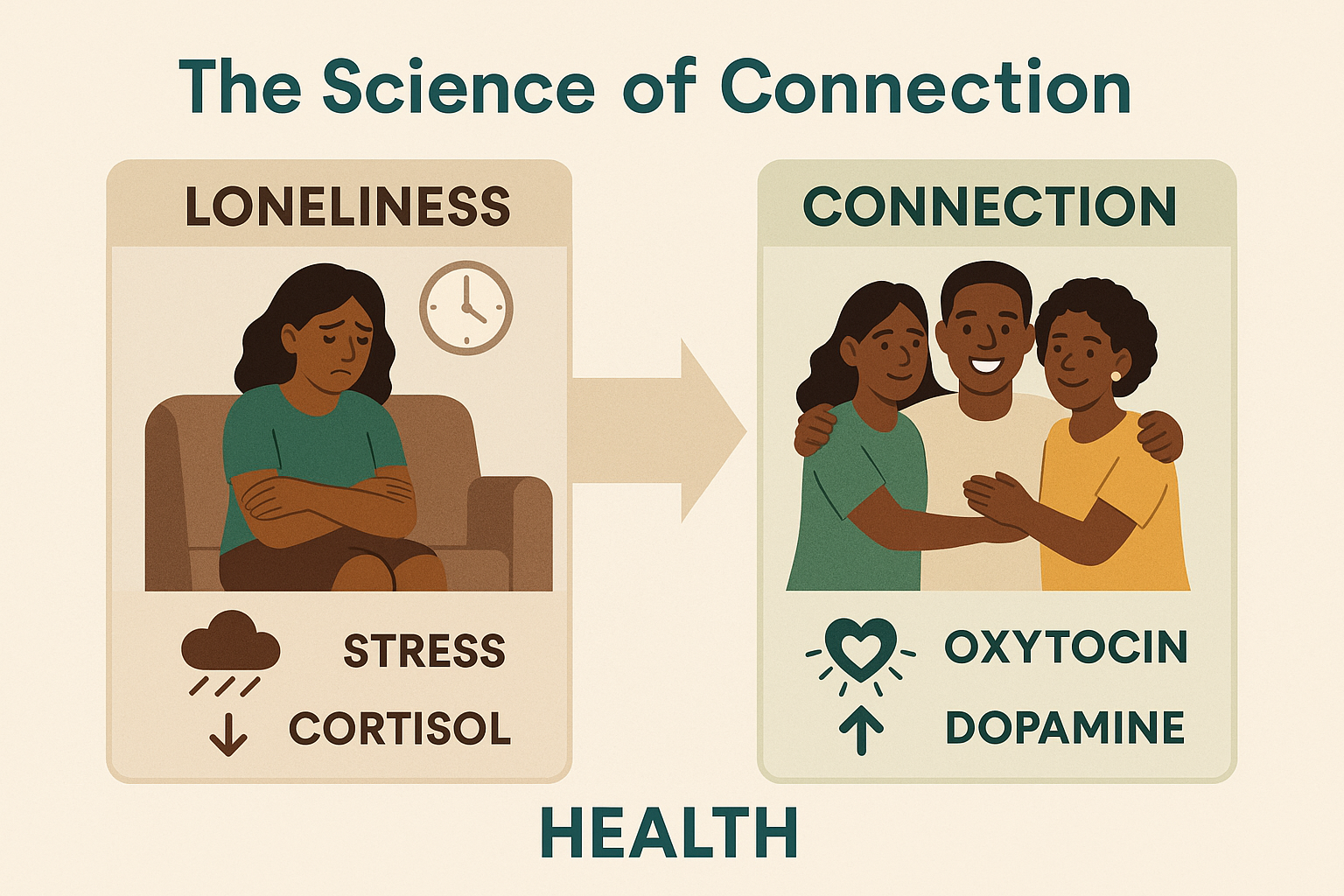
Have you ever spent a long, quiet evening while your service member is deployed, staring at the clock and feeling the weight of the silence while reliving memories?
You know that kind of loneliness feels like a physical ache. Your stomach is in knots, you’re tired but can’t sleep, and the stress feels like a heavy blanket you can’t shake off.
Now, remember the opposite feeling. The moment your phone buzzes with a broadcast message from the “Wives” WhatsApp group, or a sister checking in on you with a simple, “My sister, how you dey?”
The time you forced yourself to attend that West African Social Activities (WASA), feeling awkward, only to leave hours later with your sides aching from laughter, your phone filled with new contacts saved as “Madam Bimpe – Flat 4” and“Sister Nkechi – Corner House,” and a standing invitation for tomorrow’s naming ceremony. The surge of relief when Mama Abdul from three compounds away, whom you’ve only ever exchanged polite “good mornings” with, offers to watch your kids during a last-minute emergency.
That feeling is happiness and health!
We often think of our health in terms of adequate rest, healthy food, doctor’s visits, vitamins, gym memberships, and eating our greens. And while those are crucial, public health experts have identified something even more fundamental to our well-being. It’s called a social determinant of health. They are the conditions in the environment where we are born, live, learn, work, and play that affect a wide range of health outcomes and risks.
For us, as military spouses, one of the most powerful determinants we face, one we can actively build, is social support and community connection. This is essentially about creating a biological shield against the unique stresses of military life.
The Science of Connection
Why is a simple coffee date or a text thread as crucial as a healthy meal?
Because our bodies don’t differentiate between social stress and physical danger. When we feel isolated or unsupported, our bodies shift into a state of high alert…a stress response often referred to as “fight or flight.”
Our cortisol (the stress hormone) levels rise, our blood pressure increases, and our immune system gets suppressed. Well, this is fantastic if you need to run from a bear. However, when this state becomes chronic due to long deployments, frequent moves, or the anxiety of the unknown, it wreaks havoc on our health.
Ok, I hate to break sad news, but unfortunately, chronic stress is linked to issues like increased risk of heart disease and stroke, weakened immune system (making you more susceptible to every cold going around the mammy market), digestive problems, sleep disturbances, anxiety, and depression·
However, here’s the beautiful part…Positive Social Connection acts as a direct counterweight to that kind of stress because when we feel safe, supported, and connected, our bodies produce nature’s anti-anxiety medication in the form of hormones like oxytocin and dopamine. These are the “feel-good” chemicals that lower cortisol, reduce blood pressure, and promote feelings of trust and calm. In essence, sometimes, your squad, your tribe, your “battle buddies” are quite literally regulating your nervous system. Therefore, they are your silent shield.
The Unique Military Spouse Challenge: Building a Village from Scratch… Every Few Years
Civilians may build a support network over a lifetime, but we have to develop one, often from zero, every two to three years. Trust me, I know it’s not a small task but a monumental feat of emotional labor and courage.
We leave behind our best friends, our trusted neighbors who had a spare key, our family doctors who knew our history, and the coffee shop where the barista knew our order. We arrive in a new place, often with a service member who immediately leaves for training or a workup, and we are alone. Truly, physically, and emotionally a-l-o-n-e.
This is where the challenge becomes a health imperative. At such times, all you should do is simply rebuild your healthcare system by building a new network and making new friends…You never know what you could learn.
Your new network in your new community could be your:
First Responder: The person you call when your child spikes a fever and you have no idea where the nearest urgent care is. Yes, we all N-E-V-E-R want to use our medical center, Right??? (Let me know if you prefer the Medical Reception Center, Why? Why not?).
Mental Health Triage: The friend who listens without judgment when the loneliness of a deployment becomes overwhelming and you just need to cry.
Logistical Support: The neighbor who picks your child up from school when your car breaks down.
Information Hub: The group that tells you which pediatrician is accepting new patients, which mechanic is honest, and which grocery store has the best sales.
Without this network, every small problem becomes a massive crisis, activating that stress response over and over again. With it, challenges become manageable.
Practical Prescriptions
Knowing this is one thing; doing it is another. Of course, I know it’s hard to put yourself out there, especially when you’re tired from unpacking or even managing the house solo. But reframe it in your mind, you are not being needy; instead, you are engaging in preventative healthcare.
Here are some “prescriptions” for building your social health:
Start Small and Specific: Don’t put pressure on yourself to find a new best friend on day one. Your goal is to make one micro-connection. Compliment another parent at the Mammy Market or NAPEX. Ask one person where they found the product they are holding. These tiny interactions build momentum.
Lead with Vulnerability (It’s a Strength): When you meet another spouse, try saying, “We just PCS’d here last month, and I’m still trying to figure everything out.” This is an instant invitation. It signals that you need help and are open to connection. You’ll be amazed at how many people will respond with, “Oh my gosh, me too!” or “Here, let me help you!”
Embrace Digital Homesteading: Your next duty station might not be your forever home, but your digital community can be your forever home. Nurture the friendships from your last duty station. Keep those group texts active. These are the people who already know your history. They are a critical part of your long-term support system.
Find Your “Third Place”: This is a sociology term for a place that isn’t home (first place) or work (second place). Your”third place” is where community happens. It could be the unit’s gym, a place of worship, or a volunteer organization. Consistently show up. Relationships are built through repeated, casual contact.
Be the Inviter: This is the most challenging but also the most effective strategy. See someone who looks alone? Invite them. “A few of us are going for a walk on Saturday morning. Would you like to join?” It feels risky, but you are likely saving someone from a long, lonely afternoon. Be the person you needed when you first arrived.
A Final Formation
Military life is a series of challenges we didn’t create. However, the community we build is our most significant and powerful response…Always!
It is our buffer, our shield, and our strength. So the next time you feel guilty for taking an hour to meet a friend for coffee instead of folding laundry, remember, you are not slacking. You are engaging in a vital act of self-care and public health.
You are lowering your cortisol, boosting your oxytocin, and fortifying your immune system. You are building a social circle and a wellness plan. You are building a home. And that is the strongest foundation of health any of us can have.
What’s one connection you’ve made that got you through a tough time?
Share your story in the comments below. Your experience could be the encouragement another spouse needs to reach out today.
Read Also – 6 Ridiculous Truth About My Lifestyle.