Treasure
The Smell That Never Left: When a Soldier Comes Home but the War Follows Him
He survived an attack that claimed the lives of his colleagues. Years later, one ordinary object revealed a painful memory he was still carrying.
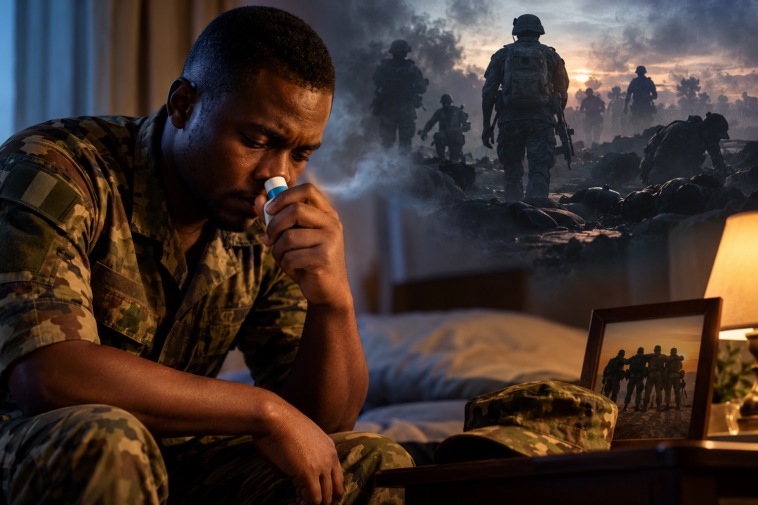
There is a soldier I know who rarely goes anywhere without a Vicks inhaler.
It was something I noticed repeatedly. Whenever our paths crossed, he seemed to reach for the small inhaler and breathe in its familiar menthol scent.
At first, I thought little of it. Perhaps he had a persistent nasal problem or simply found the inhaler refreshing.
But the frequency caught my attention, and one day, curiosity got the better of me.
I asked him about it.
His answer revealed something I had never imagined.
Years earlier, while serving in northeastern Nigeria, he had survived a violent attack in which several of his fellow soldiers lost their lives.
He was among those who lived to tell the story.
Eventually, he was redeployed to a safer location. The immediate danger had passed, his military responsibilities continued, and life appeared to have moved forward.
But something from that terrible day remained with him.
He explained that even after all those years, he could still perceive the smell of his colleagues’ blood from the attack.
I found that revelation heartbreaking.
Here was a man who had survived a deadly encounter, continued serving his country, and was now living far from the battlefield.
Yet an experience from years earlier remained painfully present to him.
I had noticed the inhaler many times without understanding the story behind it.
Suddenly, what had appeared to be an ordinary habit raised a much larger question.
How many soldiers have physically returned from war while continuing to carry memories that others cannot see?
Beyond the Battlefield: What Does Survival Really Mean?
When news breaks that soldiers have been attacked, public attention often turns to the number of casualties.
We hear how many personnel lost their lives, how many were injured, and whether an operation was successful.
The fallen may be honoured. Families mourn. Colleagues remember.
And those who survive are often described as fortunate.
They escaped death.
They lived to fight another day.
But rarely do we ask what survival looks like after the headlines disappear.
What happens to someone who survives an attack in which his colleagues lose their lives?
What happens when he returns to ordinary military duties, attends ceremonies, interacts with friends, and appears outwardly composed?
What happens when the body is safe, but reminders of the past continue to intrude into everyday life?
Surviving a traumatic event can be the beginning of a different struggle.
Some people recover with time and adequate support. Others may experience persistent distress, unwanted memories, difficulties sleeping, anxiety, or changes in how they respond to situations that remind them of the event.
These experiences vary considerably.
For some, the loss may be remembered through images.
For others, through sounds.
For others still, a particular smell may become closely associated with a moment they desperately wish they could forget.
The man I met made me think about something we often overlook…Coming back alive and coming back emotionally well are two different things!
When the Nose Remembers What the Mind Wishes to Forget
Of all the details in his story, the one that stayed with me was the smell.
Not the sound of gunfire.
Not the image of the battlefield.
The smell of blood.
It made me think about how deeply traumatic experiences can become connected to our senses.
We often associate memories with photographs, familiar voices, or places we have visited.
A particular song may remind us of childhood. The aroma of a favourite meal may bring back memories of home. The scent of someone’s perfume may remind us of a loved one.
But sensory memories can also be associated with frightening experiences.
The United States Department of Veterans Affairs’ National Center for PTSD explains that sights, sounds, smells, and other reminders can bring back memories of traumatic events.
For some individuals, these reminders may trigger intense emotional or physical reactions, even when they are far from the original danger.
This helps us understand why a person may appear safe in the present while experiencing distress connected to something that happened years earlier.
However, there is an important medical distinction.
Remembering a traumatic smell or reacting to a reminder differs from repeatedly perceiving an odour that has no identifiable external source.
The latter may involve a smell perception condition known as phantosmia, which can have several medical causes.
An appropriate clinical assessment can help distinguish these possibilities.
I cannot say whether the soldier I met was experiencing a trauma related sensory memory, a smell perception disturbance, or something else. Nor can his use of an inhaler establish a diagnosis.
What I know is that he described an experience that had remained with him for years and that experience deserves to be taken seriously.
Psychological Trauma in Nigerian Soldiers: The Invisible Wounds
In military life, physical injuries are often easier to recognise.
A soldier with a fractured limb may receive treatment and rehabilitation.
A soldier recovering from surgery may be granted medical leave.
A visible wound provides evidence that something has happened but what about the wounds nobody can see?
The wounds that leave no scars on the body yet remain painfully alive in the memory?
The memories that disturb sleep.
The unexpected reminders of a frightening encounter.
The grief associated with losing colleagues.
The emotional exhaustion that some survivors carry long after returning to ordinary life.
These experiences may be difficult to explain, particularly when everyone assumes that surviving the incident means the worst is over.
This does not mean that every soldier who has experienced combat will develop posttraumatic stress disorder (PTSD).
Many service members recover from traumatic experiences without developing a lasting mental health condition.
Others may experience symptoms that benefit from professional assessment and treatment.
PTSD is one possible consequence of trauma, but it requires clinical evaluation. Having a painful memory or experiencing a particular sensory reminder does not automatically establish that diagnosis and that distinction matters because we should avoid labelling people based on a single experience. We should also avoid dismissing what they describe simply because it appears unusual.
I explored this broader concern in an earlier article, The Invisible Wounds: Addressing Mental Health in the Military, where I discussed the stigma surrounding psychological distress and why seeking help should be understood as an act of courage.
A soldier who reports persistent distress deserves an opportunity to speak with a qualified professional who can assess both psychological and physical health concerns. The absence of a visible injury should never determine whether someone’s suffering deserves care.
The Colleagues Who Never Came Home
There is another dimension to this story that I find particularly moving.
The soldier survived an attack in which several of his colleagues died.
These were people with whom he had served.
They may have trained together, shared difficult assignments, exchanged jokes, discussed their families, or endured the challenges of deployment side by side.
They were also fathers, husbands, sons, brothers, friends, and members of communities waiting for them to return.
Although I do not know everything he experienced during or after the attack, his account raises an important question about the emotional consequences of losing colleagues in combat.
For some survivors, grief can become intertwined with traumatic memories.
Some may experience what psychologists call survivor guilt, a painful sense of guilt or questioning about having survived when others did not.
Others may experience sadness, anger, helplessness, or recurring memories without survivor guilt.
I cannot presume what this particular soldier felt.
But the deaths of his colleagues deserve recognition as losses involving real people and families, rather than casualties recorded only in operational reports.
The consequences of war extend far beyond the battlefield.
For every service member who dies, there may be a wife facing an unimaginable absence, children growing up without a parent, and relatives struggling to understand why someone they loved never returned.
For some who survive, there may also be memories of people whose lives ended while their own continued.
This brings me to an important reflection about the meaning of remembrance.
We honour the fallen by remembering their sacrifice. We must also remember the living who continue to carry the consequences of that loss.
When the Battlefield Follows a Soldier Home
This story also made me think about military wives and families.
Imagine a soldier returning home after an extremely difficult deployment.
His wife is relieved that he survived.
The children are delighted to have their father home.
Relatives offer prayers of thanksgiving, and everyone looks forward to returning to normal family life.
Yet the soldier may be struggling with experiences he finds difficult to describe.
He might become quieter than usual.
Certain sounds or smells may upset him.
He might experience disturbed sleep or withdraw from conversations about his deployment.
These behaviours can have many explanations, and they should never be treated as proof of PTSD.
But when changes are persistent or distressing, they deserve attention.
For a spouse, recognising that something may be wrong can be difficult.
She may want to ask questions but fear bringing back painful memories.
She may interpret silence as emotional distance or wonder whether she has done something wrong.
Some families may face additional challenges if a service member refuses to discuss what happened or feels uncomfortable seeking psychological care.
This is why military family wellbeing cannot be separated entirely from the mental health of serving personnel.
When one member of a household is experiencing significant psychological distress, others may also need information, reassurance, or support.
In my article The Silent Shield: Why Your Military Spouse Friends Are Your Greatest Health Asset, I explored how meaningful social connections can help military spouses cope with loneliness, prolonged separation, and the emotional pressures of military life.
Such connections can be particularly valuable when families face difficult periods of adjustment.
However, a wife should never be expected to diagnose or treat her husband.
She can listen, encourage professional care, and support his recovery while protecting her own emotional wellbeing.
And if distress is accompanied by threatening or violent behaviour, the safety of family members must be prioritised.
Compassion for a traumatised person should never require someone else to endure harm.
When we discuss the psychological consequences of military service, we must remember that families may also need support.
Breaking the Silence Around Military Mental Health
Military training places considerable emphasis on courage, discipline, alertness, endurance, and the ability to perform under difficult conditions.
These qualities are essential to military service.
But courage should also include recognising when professional help is needed.
Some individuals may worry that speaking openly about psychological distress will cause others to question their strength or professional competence.
Others may lack information about confidential services or the symptoms that warrant assessment and these concerns can discourage help seeking.
The solution therefore requires more than encouraging soldiers to be resilient.
Military welfare systems should make appropriate psychological support accessible throughout service, including after traumatic incidents, during redeployment, and when difficulties emerge much later.
Confidentiality is especially important!
A soldier should be able to seek assistance without unnecessary exposure of sensitive personal information.
Mental health programmes should also recognise that trauma related concerns may develop or become apparent long after an incident.
A soldier who appeared to cope well immediately after an attack may experience difficulties later. That possibility makes follow up care and accessible referral pathways particularly valuable.
There is also an important role for military leadership…
Commanders and supervisors can help create an environment in which psychological care is regarded as a legitimate component of health and readiness, rather than evidence of personal failure.
Families should know where they can obtain reliable information and assistance.
Peer support may provide understanding and connection, while trained mental health professionals can assess symptoms and offer evidence based treatment when appropriate.
For individuals diagnosed with PTSD, effective therapies include Cognitive Processing Therapy, Prolonged Exposure Therapy, and Eye Movement Desensitization and Reprocessing. These approaches are supported by clinical evidence, although treatment decisions should always be individualized by qualified professionals.
In Nigeria, organisations such as Heroes Help describe programmes supporting the mental health and emotional wellbeing of serving personnel, veterans, and military families.
The availability of appropriate care should never depend entirely on whether someone has the courage or resources to ask repeatedly for help. A military institution that prepares people to survive combat should also invest in helping them recover from its consequences.
Sometimes, Healing Begins With Being Heard
When I think back to the soldier and his inhaler, I remember that our conversation began with an ordinary question.
I had noticed something unusual, and I asked about it.
His response changed how I understood what I had been seeing.
It also reminded me that we often know surprisingly little about what others have experienced.
The colleague who seems unusually withdrawn.
The soldier who avoids certain conversations.
The veteran who reacts unexpectedly to a sound.
The family member who has difficulty sleeping.
There may be stories behind these experiences, although we should never assume we know what those stories are.
And sometimes the most respectful response is simply to listen Share on X.
Listening does not require forcing somebody to describe a traumatic event.
It does not involve demanding details, offering an immediate diagnosis, or insisting that the person should have recovered by now.
It means creating enough emotional safety for someone to share what they choose, when they choose.
It also means knowing when to encourage professional help.
If someone reports recurring distressing memories, persistent changes in smell, or other symptoms affecting daily life, an appropriate medical assessment can help identify possible causes and treatment options.
For family members, compassion can coexist with boundaries and a recognition that professional care may be needed.
One thoughtful conversation cannot erase a traumatic experience.
But it may help someone feel heard and make it easier for them to consider further support.
The Small Inhaler That Changed My Perspective
Before that conversation, I saw a soldier using a Vicks inhaler.
Afterwards, I saw the same ordinary object differently.
It reminded me that an everyday behaviour can sometimes lead us to discover an experience we would never have imagined.
I do not know everything that happened to this man after the attack.
I do not know whether he has received treatment, what clinical explanation might account for the smell he describes, or what other memories he may carry.
Those details belong to him.
But I know his account made me think differently about the meaning of survival.
We often celebrate soldiers for returning alive, as we should.
Yet returning alive should also mean returning to a community prepared to support their physical and psychological wellbeing.
A new posting cannot necessarily erase a traumatic memory.
The passing of years does not guarantee that every emotional wound has healed.
And being able to perform military duties does not automatically mean that someone has fully recovered from a painful experience.
Perhaps that is the lesson I will carry from this encounter.
Sometimes, what we see tells us very little about what another person is living through.
An ordinary object can conceal an extraordinary story.
A confident appearance can coexist with private distress.
And a soldier who survived the battlefield may still deserve help dealing with what happened there.
Survival should never be the only measure of a soldier’s wellbeing!
To Every Soldier Carrying an Invisible Wound
To the soldier who survived when others did not, your life matters.
To the veteran who continues to remember a painful encounter, your experiences deserve understanding.
To the serving personnel who worry that asking for psychological help might be misunderstood, seeking appropriate care can be an important act of responsibility toward yourself and the people who depend on you.
And to the families who quietly support loved ones through difficult transitions, your wellbeing matters too.
We honour military personnel for their courage in the face of danger.
But courage should also include the freedom to acknowledge suffering, seek care, and work toward recovery.
No soldier should have to prove bravery by remaining silent about persistent distress.
No family should be left to navigate serious psychological difficulties without appropriate support.
And no survivor should be reduced to a statistic simply because he escaped with his life.
The soldier I met survived an attack that claimed the lives of his colleagues.
Years later, his experience reminded me of something important.
A soldier can leave the battlefield behind geographically while still needing help with what happened there.
Our responsibility as a society should extend beyond welcoming soldiers home. It should include ensuring that those who need care have a meaningful opportunity to receive it.
Because the greatest tribute we can offer those who survive military service goes beyond applauding their courage.
It includes a commitment to their wellbeing.
Your Story Matters
Have you or someone close to you experienced the lingering emotional effects of military service?
Perhaps you are a military spouse who has supported a loved one through a difficult transition, or a veteran who has learned valuable lessons about recovery and seeking help.
At The Soldier’s Wife, we believe that respectful conversations about military experiences can encourage understanding, reduce stigma, and bring greater attention to the wellbeing of service members and their families.
We welcome stories and reflections shared voluntarily, with respect for personal privacy, confidentiality, and operational security.
You can reach us at info@thesoldierswife.com or treasure@thesoldierswife.com.
Because surviving the battlefield should be the beginning of another opportunity to live well, not a reason to suffer in silence.
Discover more from The Soldiers Wife
Subscribe to get the latest posts sent to your email.